How Local Sales Help Families, Churches, and Neighborhood Groups
Apr 24, 2026
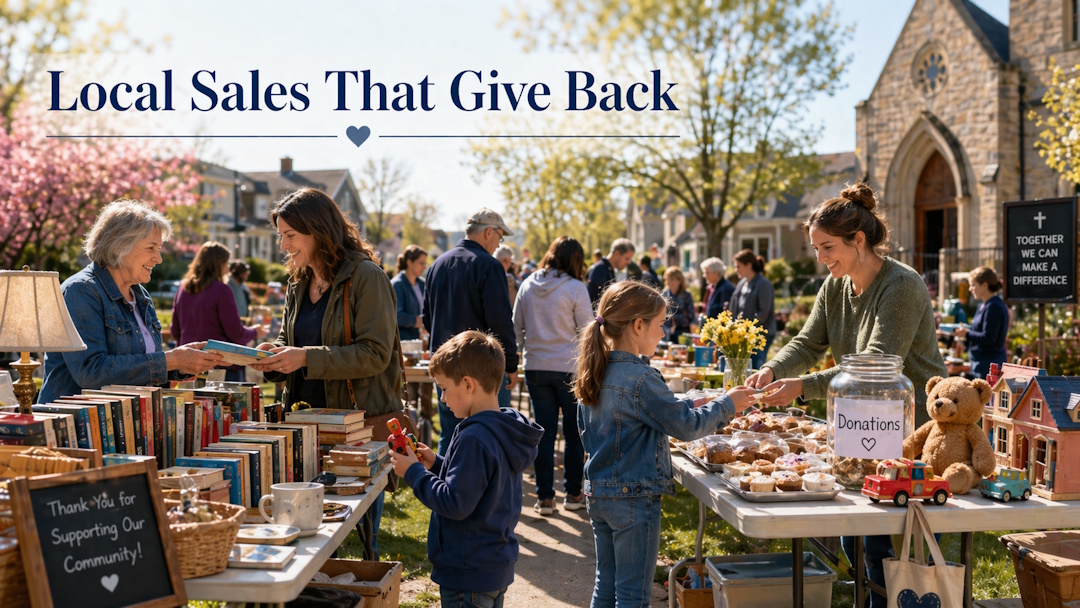
Local sales help families, churches, and neighborhood groups raise money in a form people still trust. A yard sale, church rummage sale, book sale, or flea market does not ask people to send money into a void and hope for the best. Buyers can see the tables, talk to the people running the sale, and leave with something they can use. That direct exchange still carries weight.
In Erie, Cleveland, Buffalo, and Pittsburgh, these sales also fit real life. People plan Saturday mornings around them. They stop after breakfast, bring cash, and look for books, toys, tools, dishes, furniture, baby gear, records, or holiday items. For the group running the sale, each small purchase stacks up fast. Ten dollars here, twenty there, then a busy final day can turn donated goods and extra household items into real support.
That matters for more than one reason. Local groups often need money fast, with low overhead and little room for waste. A family may need help with sports fees, school costs, camp, moving expenses, or a sudden gap in the monthly budget. A church may be trying to support a food pantry, youth ministry, community meal, mission fund, or a building repair that cannot wait. A neighborhood group may want to pay for a clean up day, a seasonal event, a shared sign, or a small improvement that makes the area feel cared for. A good sale can help cover those needs without taking on debt, paying for a formal event space, or waiting months for donations to trickle in.
Why local sales still work
Part of the reason these sales keep working is simple. People like the feeling of getting something useful at a fair price. A buyer may walk into a church sale looking for one lamp and walk out with a stack of books, a set of dishes, a board game, and a winter coat for a child. That extra spending happens because the price feels low risk and the cause feels real.
The best local sales also feel personal in a good way. In Erie, a church basement sale can feel less like a transaction and more like a room full of neighbors helping neighbors. In Buffalo, a huge scholarship book sale can draw serious readers, teachers, parents, and resale buyers from all over the area because the scale is worth the drive. In Cleveland suburbs, a neighborhood garage sale can pull traffic from several nearby communities if the listing is clear and the mix looks strong. Around Pittsburgh, a library sale or church rummage sale often gets repeat buyers because people remember which groups run a clean, honest event.
Trust matters more than people admit. Buyers spend more freely if the sale looks organized, the prices make sense, and the cause is easy to understand. A sign that says proceeds support a youth group, scholarship fund, pantry, or community project gives the sale a reason beyond clearing space. People are far more willing to add one more sweater, one more puzzle, or one more box of books to the pile if they know the money is helping someone nearby.
There is also a practical side. Local sales keep costs down. Families use their own driveway, lawn, or garage. Churches already have tables, parking, volunteers, and indoor space. Neighborhood groups can turn one block into a high traffic event without paying for a rented hall. That low cost structure means more of the money stays with the cause.
What turns donated stuff into real money
The strongest sales do not rely on luck. They make it easy for buyers to say yes.
Clear listings do a lot of the work before the first car pulls up. A vague line about lots of stuff does almost nothing. A listing that says tools, records, baby gear, outdoor furniture, craft supplies, holiday decor, kitchenware, and books gives people a reason to stop. If there is a presale, bag sale, half price day, or preview night, that should be stated clearly. If parking is tight, say it. If credit cards are accepted, say that too. Good information brings better traffic and fewer wasted trips.
Inside the sale, layout matters. People buy more at sales that feel easy to shop. Books should stay with books. Jewelry should be together. Holiday items should have their own space. Clothing should be sorted in a way that makes sense. If a church sale has one room for housewares, one for seasonal items, one for toys, and one for clothing, shoppers can move with purpose instead of giving up after ten minutes.
Pricing matters just as much. Cheap helps, but random pricing hurts. A clean structure is easier on volunteers and easier on buyers. Dollar tables work. Color tag discounts work. Half price on the last day works. Bag sales work well for books, clothing, and media. People like knowing the rules without asking at every table.
Good sales also understand the difference between common items and draw items. A room full of mugs and used kitchen tools is fine, but it will not carry the whole event. The big traffic pull often comes from furniture, tools, records, vintage holiday pieces, children’s items, collectibles, clean name brand clothing, or a book room with real depth. That is true in Erie, true in Buffalo, true in the Cleveland area, and true around Pittsburgh. Buyers will travel for variety and volume, not for leftovers spread across folding tables.
Timing can help too. A one day family yard sale may do best with a sharp morning start and clear prices. A church sale with a large donation base may do better across two or three days, with a paid preview, full price opening, then a discount day at the end. A book sale can stretch longer if the stock is deep enough and the rooms stay easy to browse. The sale does not need to be fancy. It needs to feel worth the stop.
What shoppers and communities get out of it
Buyers are not just hunting for bargains. Many of them like the idea that their money stays close to home. A twenty dollar purchase at a church sale may help fund a pantry shelf. A stack of books at a library sale may support programs or scholarships. A neighborhood rummage sale may help cover the cost of a shared event that brings people outside and talking to each other.
That local connection gives these sales more staying power than a random online listing. People remember the sales that feel useful, friendly, and well run. They come back the next year. They tell a friend. They show up early. In some cases they donate items for the next sale because they saw the turnout and trusted the group behind it.
Families benefit in a different way. A sale can clear out a house, free up space, and bring in cash at the same time. Parents can move outgrown clothes, toys, books, and gear in one weekend. Adult children helping a parent downsize can turn extra furniture and household goods into money without the stress of listing every single item online. That ease matters. Not every seller wants to spend weeks answering messages, setting pickup times, and chasing no show buyers.
Churches and neighborhood groups also gain something that does not show up in the cash box. Volunteers work together. People who have lived near each other for years actually talk. Shoppers get a reason to walk through a church hall, a school room, or a neighborhood block they might have ignored the rest of the year. A good sale can create a stronger sense of connection just by giving people a reason to show up in person.
That is part of what makes local sales more than a simple money play. They solve a real problem, but they also build habits. People learn where to go for a decent book sale, which church runs a packed rummage sale, which neighborhood does a strong block event, and which family sales are worth the early stop. Over time, that reputation becomes its own asset.
In Erie, Cleveland, Buffalo, and Pittsburgh, that pattern still holds. Local sales work because they are practical, visible, low cost, and rooted in actual community needs. Buyers get value. Sellers get cash. Groups get support. Nothing about that is flashy, and that is exactly why it still works.