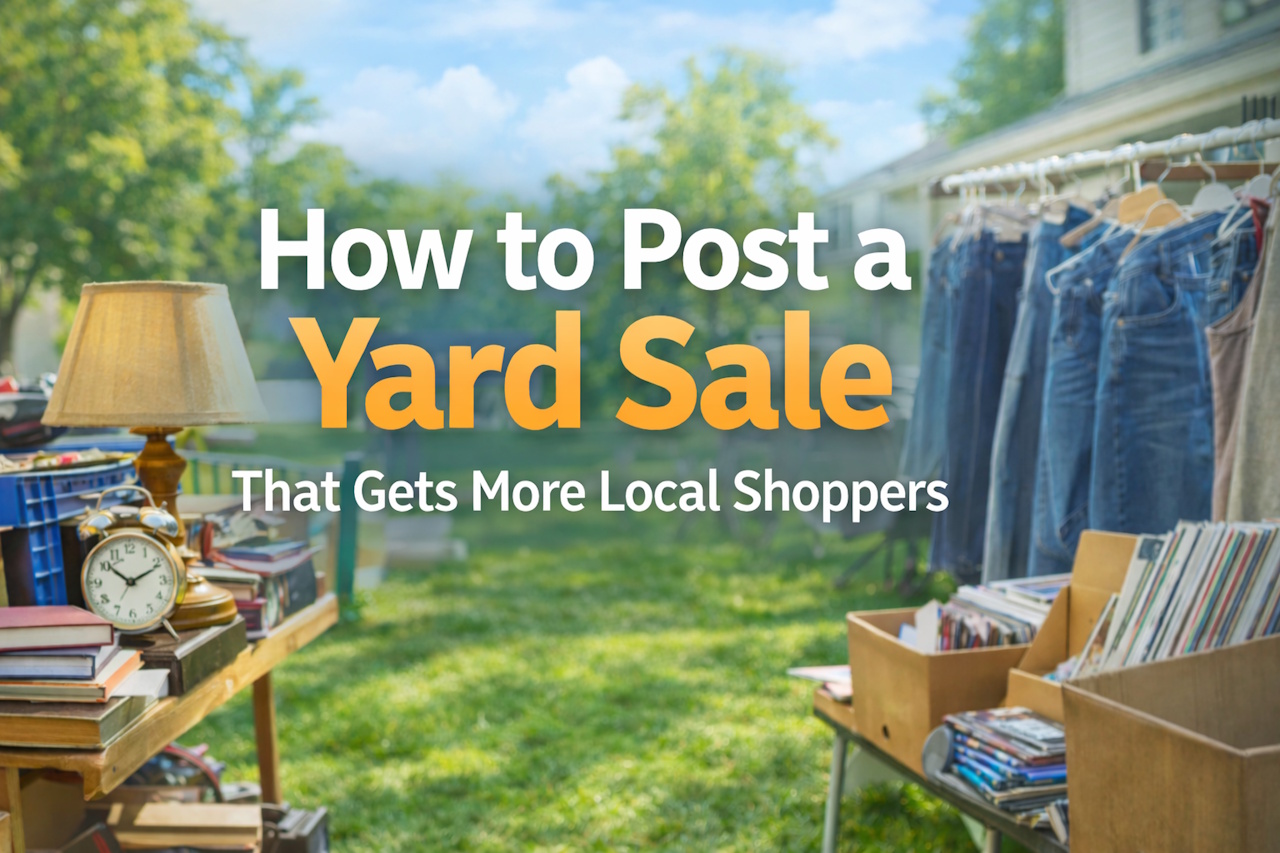
How to Post a Yard Sale That Gets More Local Shoppers
Apr 6, 2026
A lot of yard sale posts fail for one simple reason. They do not give people enough reason to stop.
Most shoppers scroll fast. They are looking for clues. Good photos, clear dates, a real location, and a few strong item types do more work than a long rambling post ever will. If your listing looks vague, people assume the sale will be weak, picked over, overpriced, or not worth the drive.
If you want to know how to post a yard sale that gets more local shoppers, start by thinking like a buyer. A buyer wants to know three things right away. Is it nearby? Is it worth the stop? Is it easy to shop? Your post should answer all three in the first few lines.
That matters in every market your site covers. In Erie, shoppers may be willing to cross town for a strong sale, but not for a vague one. In Cleveland, Buffalo, and Pittsburgh, traffic and distance make clear sale details even more important. The stronger the post, the easier it is for someone to decide your sale belongs on their route.
Give Shoppers the Details That Make Them Stop
The best yard sale posts are specific. Not fancy. Not cute. Specific.
Start with the basics. Include the date, start time, end time, city, and neighborhood or part of town if you are comfortable sharing it. A full address is helpful, though some sellers prefer to add that later. Either way, your location needs to feel real. A post that just says “big sale this weekend” does not give a shopper much to work with.
Next, name the items that matter. “Something for everyone” sounds empty because people see it all the time. Real item categories pull better. Tools, furniture, kitchen items, toys, vintage decor, records, books, collectibles, baby items, outdoor gear, and holiday items all help paint a picture. If you have a few strong pieces, say so. A yard sale with power tools, solid wood furniture, and Pyrex will get a different reaction than one with “miscellaneous household.”
Photos carry a lot of weight. Put your best image first. Wide shots that show full tables, packed shelves, or a clean garage setup usually work better than one close photo of a random lamp. Buyers want proof that the sale has depth. They also want to see that it looks organized enough to shop without a headache.
Do not wait until the last minute to take pictures. Bad light, clutter, and weak angles make even decent items look skippable. A few clean photos with visible inventory will do far more for your turnout than extra adjectives.
Pricing details can also help, but only if they are useful. If most of the sale is low priced, say that. If you have a half-price day, a bag sale, or plenty under one dollar, that can help too. Buyers want value, and a post that hints at fair pricing will usually pull more interest than one that says nothing at all.
Write the Post Like a Real Person, Not a Yard Sign
The strongest sale posts sound natural. They do not read like a shouting ad and they do not read like a note to yourself.
A good post opens with the core facts, then gives a quick picture of the sale. Something like this works better than most people realize. Multi-family yard sale in west Erie this Friday and Saturday from 8 to 2. Furniture, tools, toys, kitchen items, books, and women’s clothing. Clean items, fair prices, and plenty to browse. That is simple, but it gives people something real.
What hurts a listing is fluff. “Huge massive blowout” does not mean much. “Tons of stuff” means even less. Most shoppers have learned to ignore posts that sound padded. They want facts. If the sale is strong, the facts are enough.
It also helps to match the wording to the kind of shoppers you want. If you are trying to move practical household items, say that. If you have vintage goods, collectibles, records, or tools, mention those clearly. Buyers looking for children’s items are not scanning for the same thing as people hunting for resale inventory. A better post helps the right people find you.
Your title matters too. “Yard Sale” is better than nothing, but it leaves a lot on the table. “Garage Sale in Hamburg With Tools, Furniture, and Books” gives a shopper a reason to click. “Multi Family Yard Sale in Erie With Toys, Home Goods, and Baby Items” does the same thing. Clear beats clever almost every time.
This is one place where local context helps. In Cleveland, Buffalo, and Pittsburgh, shoppers often sort their day by area. A post that makes the location obvious has a better chance of making the cut. In Erie, a strong neighborhood cue can still help people plan their morning faster. Good local wording saves shoppers time, and that makes your listing stronger.
Make It Easy to Trust the Sale and Easy to Find
Trust matters more than many sellers think. If a listing feels incomplete or sloppy, buyers start filling in the blanks on their own. Usually not in your favor.
A clean post with good photos, clear times, and a readable description feels more reliable. That does not mean it has to look polished or corporate. It just needs to feel honest. Buyers can tell the difference between a real local sale and a weak post thrown together in thirty seconds.
Posting in the right places also matters. A strong yard sale listing on your site is useful, but it gets better if you share it in local Facebook groups, neighborhood pages, and community circles that already attract sale shoppers. Keep the wording consistent so people recognize the sale across platforms. If details change, update them fast. Nothing turns people off like arriving at the wrong time or seeing a canceled sale that still looks active online.
If your sale runs more than one day, remind people of that in the post. Some buyers prefer day one for first pick. Others like the second day for lower prices and less competition. If you have room to mention restocking, added items, or a markdown on the last day, that can help bring in a second wave of traffic.
It is also smart to think about the buyer’s first impression after they arrive. Good signs near the road, clear parking expectations, and a visible setup help connect the strong post to a strong real-world stop. A good listing gets them there. The setup helps them stay and shop.
The best yard sale posts do not try to impress people with noise. They help local shoppers make a quick decision. Clear item types, honest photos, real location details, and a simple, readable post will do more than hype ever will. If your goal is to get more local shoppers in Erie, Cleveland, Buffalo, or Pittsburgh, the pattern is the same. Give people enough useful details to feel confident that your sale is worth the stop.